
Strategic API Integration: Building Intelligent Business Automation Ecosystems
By Edson Santos • Updated: December 2025
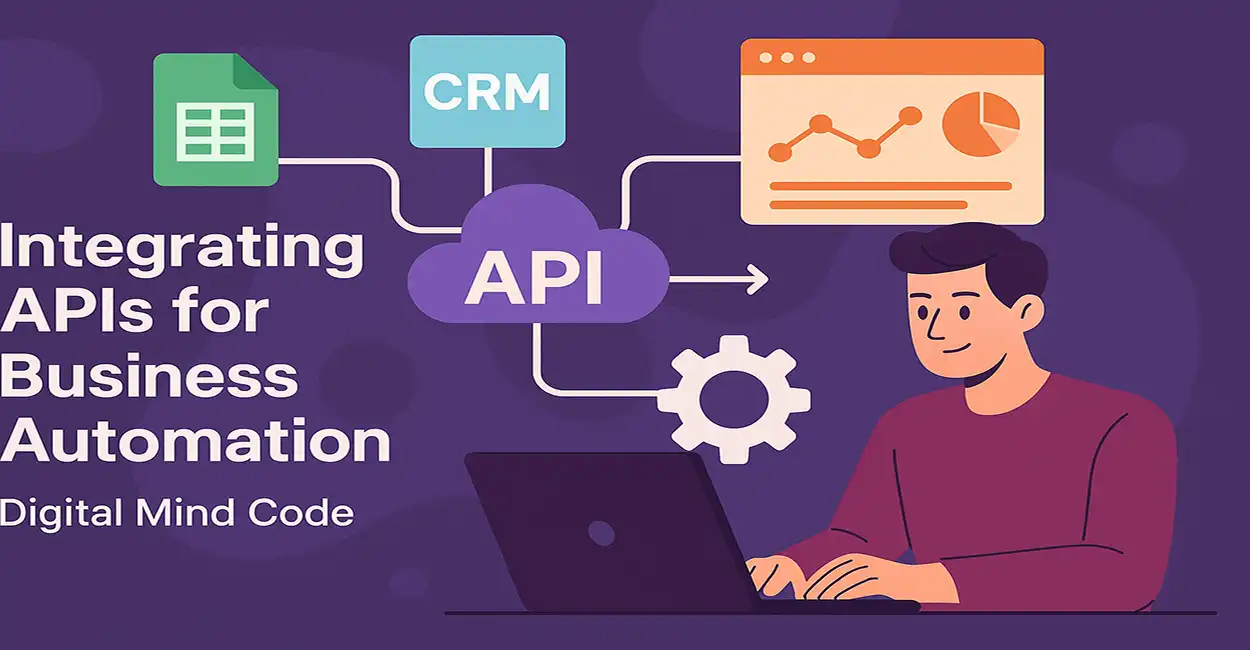
API integrations have evolved from technical conveniences to strategic business infrastructure. In today's competitive landscape, the ability to connect disparate systems isn't just about efficiency—it's about creating intelligent ecosystems where data flows seamlessly between applications, enabling real-time decision-making, predictive analytics, and autonomous business processes that operate with minimal human intervention.
The modern business environment demands unprecedented agility, with data silos representing one of the most significant barriers to growth and innovation. API integrations break down these silos, transforming isolated applications into cohesive systems that communicate, collaborate, and optimize themselves. This transformation represents a fundamental shift from manual processes to intelligent workflows that scale with your business while maintaining consistency and accuracy.
This comprehensive guide explores strategic API integration approaches that go beyond simple connections to create sophisticated automation ecosystems. We'll examine architectural patterns, security considerations, scalability frameworks, and real-world implementations that demonstrate how APIs can transform business operations from reactive to predictive, from manual to autonomous.
1. The Evolution of APIs: From Technical Interface to Business Enabler
APIs have undergone a remarkable transformation in their role within business ecosystems. Originally conceived as technical interfaces for developers, they've evolved into strategic business assets that enable new revenue streams, operational efficiencies, and competitive advantages. Understanding this evolution is crucial for implementing integrations that deliver maximum business value.
First Generation
- Simple data exchange protocols
- Limited standardization
- Developer-centric implementation
- Basic authentication methods
- Minimal documentation and support
Current Generation
- RESTful architecture dominance
- Standardized authentication (OAuth 2.0)
- Comprehensive documentation (OpenAPI/Swagger)
- No-code/low-code integration options
- Real-time capabilities (WebSockets, webhooks)
Next Generation
- AI-enhanced API interactions
- Self-documenting and self-healing APIs
- Predictive scaling and optimization
- Blockchain-integrated security
- Natural language API interaction
Strategic Insight: The most successful API integrations don't just connect systems—they create new business capabilities. Each integration should be evaluated not just on technical feasibility, but on its potential to enable new processes, generate insights, or create competitive advantages that weren't possible with isolated systems.
2. No-Code/Low-Code Integration Platforms: Democratizing Automation
The emergence of no-code and low-code integration platforms has fundamentally democratized API integration, transforming what was once exclusively developer territory into accessible business automation capability. These platforms abstract technical complexity while providing powerful integration capabilities.
Zapier
Best for quick, reliable automations with extensive app library and user-friendly interface. Ideal for marketing teams and small businesses needing rapid implementation with minimal technical overhead.
Make.com
Advanced visual workflow builder with powerful data transformation capabilities. Suitable for complex multi-step processes requiring conditional logic and data manipulation.
n8n
Open-source platform offering maximum flexibility and control. Perfect for organizations with specific security requirements or needing custom integrations not supported by commercial platforms.
Platform Selection Framework:
Complexity Assessment
Evaluate workflow complexity, data transformation requirements, and integration depth to match platform capabilities with business needs.
Scalability Considerations
Consider volume limits, concurrent execution capabilities, and pricing structures as automations scale from dozens to thousands of executions daily.
Security and Compliance
Assess data residency, encryption standards, access controls, and compliance certifications relevant to your industry and geographic operations.
3. Advanced Integration Architecture Patterns
Moving beyond simple point-to-point connections requires understanding advanced integration patterns that create resilient, scalable automation ecosystems. These architectural approaches prevent common integration pitfalls while maximizing system reliability and maintainability.
Pattern 1: Event-Driven Architecture
- Webhook Implementations: Real-time notifications triggering downstream processes without polling
- Event Buses: Centralized event routing enabling loose coupling between systems
- Event Sourcing: Maintaining complete event history for auditability and replay capability
- Reactive Systems: Systems that respond to events with appropriate actions automatically
- Dead Letter Queues: Failed event handling with automatic retry and manual intervention capability
Pattern 2: Data Synchronization Strategies
- Bidirectional Sync: Maintaining data consistency across multiple systems with conflict resolution
- Unidirectional Master-Slave: Designating authoritative data sources with downstream replication
- Delta Synchronization: Transferring only changed data to optimize performance and reduce costs
- Batch Processing: Scheduled bulk data transfers for non-time-sensitive integrations
- Real-Time Streaming: Continuous data flow for time-critical business processes
4. Security and Compliance Architecture
API integrations create expanded attack surfaces and compliance considerations that must be addressed proactively. A comprehensive security strategy encompasses authentication, authorization, encryption, monitoring, and governance.
Critical Security Components:
- OAuth 2.0 Implementation: Industry-standard authorization framework with appropriate grant types for different integration scenarios
- API Key Management: Secure storage, rotation, and revocation of API keys with proper access scoping
- Transport Security: TLS 1.3 enforcement, certificate validation, and proper cipher suite configuration
- Data Encryption: Encryption at rest and in transit for sensitive data with proper key management
- Audit Logging: Comprehensive logging of all API interactions for security monitoring and compliance reporting
Compliance Framework Integration:
GDPR and Data Privacy
Implementing data minimization, right to erasure, and cross-border data transfer compliance within integrated workflows.
Industry-Specific Regulations
Addressing requirements like HIPAA for healthcare, PCI DSS for payment processing, or SOC 2 for service organizations.
Data Residency Requirements
Ensuring data processing and storage comply with geographic restrictions and sovereignty requirements.
5. Real-World Implementation: Intelligent Marketing Operations
Consider a sophisticated marketing operations ecosystem that integrates CRM, advertising platforms, analytics tools, and communication systems through strategic API integration. This implementation demonstrates how thoughtful integration creates capabilities far exceeding individual system functionality.
Integrated Marketing Automation Workflow:
Lead Capture and Enrichment
Website forms trigger API calls to CRM for lead creation while simultaneously querying enrichment services for additional prospect data.
Intelligent Segmentation
CRM data flows to analytics platforms where machine learning models predict conversion probability and optimal communication timing.
Multi-Channel Engagement
Segmentation triggers coordinate email sequences, retargeting ads, and personalized content delivery through integrated communication APIs.
Performance Optimization
Real-time analytics feed conversion data back to advertising platforms for automatic bid adjustment and audience refinement.
6. Monitoring, Maintenance, and Optimization Framework
Successful API integration requires continuous monitoring, proactive maintenance, and systematic optimization. This operational framework ensures integrations remain reliable, efficient, and valuable as business needs evolve.
Performance Monitoring
- Response time tracking and alerting
- Error rate monitoring and analysis
- Throughput and capacity planning
- API limit consumption tracking
Change Management
- API version change detection
- Deprecation monitoring and migration
- Documentation change tracking
- Breaking change impact assessment
Cost Optimization
- API call volume analysis
- Pricing tier optimization
- Caching strategy implementation
- Batch processing consolidation
7. Future Evolution: AI-Enhanced API Ecosystems
The next frontier in API integration involves artificial intelligence transforming how systems interact, adapt, and optimize themselves. This evolution moves integration from configured connections to intelligent ecosystems.
Self-Healing Integrations
AI monitoring of integration health with automatic detection and remediation of common issues, reducing manual intervention and downtime.
Predictive Optimization
Machine learning analysis of integration patterns to predict optimal timing, batching strategies, and resource allocation.
Natural Language Integration
AI interpretation of business requirements to automatically design and implement appropriate integration patterns without technical specification.
Adaptive Security
AI-enhanced threat detection and response specific to API integration patterns, identifying anomalous behavior and potential security breaches.
💡 Strategic Implementation Priority
Begin your API integration journey by identifying one high-impact, well-defined business process where manual data transfer or system isolation creates significant inefficiency. Design a simple but complete integration for this process, implement monitoring from the start, and use this foundation to expand systematically to more complex integrations. This focused approach maximizes learning while delivering immediate business value.
Conclusion: Building Competitive Advantage Through Strategic Integration
API integration has transcended its technical origins to become a fundamental component of business strategy and competitive advantage. The organizations that will thrive in the coming decade are those that understand integration not as a series of technical connections, but as the creation of intelligent ecosystems where data flows freely, processes optimize themselves, and insights emerge from previously isolated information.
The most successful integration strategies balance technical sophistication with business alignment, security with accessibility, and immediate value with long-term scalability. By approaching API integration as a strategic capability rather than a technical task, businesses can transform operational efficiency, accelerate innovation, and create sustainable competitive advantages in increasingly digital markets.
Remember that the ultimate goal of API integration isn't connecting systems—it's enabling capabilities. Each integration should be evaluated based on the new business capabilities it enables rather than the technical connections it creates. Through this strategic lens, API integration becomes not just an operational necessity, but a source of innovation and competitive differentiation.
🚀 Continue Your Automation Journey: Advanced Workflow Automation with AI-Driven Systems and Predictive Analytics
✍️ Comprehensive Guide by Edson Santos • Digital Mind Code
Disclaimer: The information provided in this article is for educational and informational purposes only. It does not constitute professional advice, nor does it guarantee results on Google Search, ranking performance, or monetization outcomes. API technologies, security practices, and integration patterns evolve frequently. Always conduct thorough testing, security assessments, and compliance reviews before implementing API integrations in business-critical systems. Digital Mind Code is not responsible for any actions taken based on the content of this article.